OCP Summit 2026 Storage Recap: the 245TB Era, Liquid-Cooled SSDs, and the PCIe 6.0 Horizon
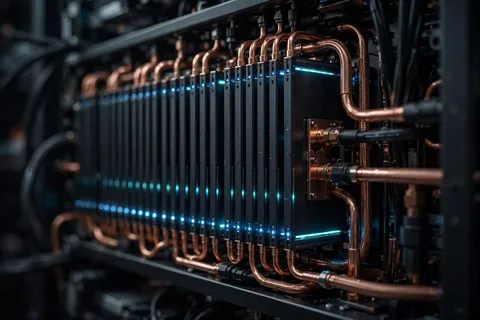
OCP Summit 2026 Storage Recap: the Week Enterprise Flash Went All In on Density
This OCP Summit 2026 storage recap covers the news that mattered from the Open Compute Project Global Summit 2026, which ran October 12–15 at the San Jose Convention Center and closed yesterday. The theme of the show was scaling in the AI era — and the storage industry's answer is clear: cram more flash into less rack space, keep it cool with liquid, and start warming up for PCIe 6.0.
The headlines: a 20-million-IOPS near-GPU SSD demo on third-generation XL-FLASH, the first E1.L SSD from one of the industry's biggest NAND makers, a liquid-cooled enterprise SSD line announced on the final day — and the transition of the 245TB SSD from roadmap bullet point to shipping product.
This recap pulls together the verified announcements, separates firm specifications from marketing, and explains what the week in San Jose means for everyone else — from infrastructure buyers to the enthusiast wondering what it means for their next drive purchase.
Why OCP matters more than a product launch event
The Open Compute Project summit is not a consumer show. It is where hyperscalers, OEMs, and component vendors agree on the open specifications that let a drive from any vendor slot into any compliant server — the OCP Datacenter NVMe SSD Specification being the most important document most consumers have never heard of. When a vendor announces compliance with OCP spec v2.5 or v2.6, that is a signal to the world's largest data center operators that the drive has been validated against a shared checklist of behavior, telemetry, and manageability.
That is why this week's announcements matter beyond their spec sheets. Storage has become the pacing item for AI infrastructure: model checkpoints measured in terabytes must be loaded, saved, and shuttled between nodes; inference pipelines stream through data lakes that grow daily. The summit's subtext is that the next wave of AI inference will expand storage requirements across centralized, regional, and edge environments — and flash vendors came to San Jose with hardware answers.
Booth #F9: the near-GPU demo and liquid-cooled E1.S
One of the most-watched demonstrations at the show was a "Super High IOPS SSD for Near-GPU Workloads" demo featuring GP Series NVMe SSDs using XL-FLASH generation 3 technology: more than 20 million I/O operations per second in 512-byte random reads. A flagship consumer PCIe 5.0 drive does roughly 1.5 million random read IOPS; this demo pushed an order of magnitude beyond that, aimed at workloads sitting next to the GPU where latency, not capacity, is the currency — checkpoint restore, KV-cache staging, embedding-store lookups.
Crucially, this was a technology demonstration, not a product announcement. No model numbers, no capacities, no ship dates. XL-FLASH is SLC-class flash used as a low-latency tier, and the demo's job was to argue that a flash tier belongs directly in the GPU's neighborhood rather than behind a network hop. Treat the 20M IOPS figure as a proof point about controller and media architecture, not as a drive you will be able to buy.
The same booth showcased NX1 Series E1.S NVMe SSDs with liquid cooling for AI data centers, alongside a technical session on liquid cooling for E1.S SSDs — the "everything in the AI rack gets a cold plate" argument extended to the SSD tier.
The LD4: E1.L goes high-density (read the fine print)
The LD4 was the summit's high-density story on the E1.L side. Announced October 9 and exhibited at the show, it is the vendor's first SSD in the E1.L form factor, built on eighth-generation BiCS FLASH QLC NAND, targeting read-intensive hyperscale workloads in 1U high-density servers — the classic "AI data lake node" shape.
The LD4 is PCIe 5.0 spec-compliant but signals at Gen4 x4 (16 GT/s per lane, four lanes) — not a full-bandwidth PCIe 5.0 x4 drive. It implements NVMe 2.0e, complies with the OCP Datacenter NVMe SSD Specification v2.6, and is single-port. The vendor is sampling 15.36TB and 30.72TB capacities to select customers; the platform architecture is validated up to 122.88TB, but that is a platform ceiling, not a SKU you can order. And no official throughput, IOPS, endurance, power, or pricing figures have been published for the LD4 — any throughput number attached to this drive belongs to a different product. Samples are for functional evaluation only.
Why announce a drive with no performance numbers? Because in hyperscale storage, the form factor, the NAND generation, and the OCP spec compliance are the news. We covered the LD4's announcement in detail earlier this week — see our OCP Summit 2026 storage preview for the full context.
CM9-DLC: liquid cooling becomes a product, not a project
The summit's closing-day announcement was the CM9-DLC: direct liquid cooling (DLC) models added to the existing CM9 Series enterprise SSD lineup, in the E3.S form factor, supporting cold-plate-enabled server designs while remaining compatible with traditional air-cooled environments.
The published specifications:
- Interface: PCIe 5.0, NVMe 2.0, NVMe-MI 1.2c; OCP Datacenter NVMe SSD v2.5 compliant; dual-port support in E3.S
- Cooling: direct liquid cooling via cold plate; also works in air-cooled environments
- Capacities and endurance: up to 30.72TB read-intensive (1 DWPD) and up to 25.6TB mixed-use (3 DWPD)
- Sequential performance (128 KiB, QD32): up to 14.8 GB/s read, 11 GB/s write
- Random performance (4 KiB): up to 3,400 KIOPS read (QD512), 800 KIOPS write (QD32)
- Availability: sampling to select customers; showcased at the summit
This is the first time direct liquid cooling has been attached to a mainstream enterprise SSD line rather than offered as a custom engineering engagement. For the full deep dive, see our dedicated article: Liquid-Cooled Enterprise SSDs Have Arrived: Inside the CM9-DLC.
The 245TB era: from roadmap to shipping product
Stepping back from any single booth, the summit's biggest storage story is the one nobody had to announce this week: the 245TB SSD has crossed from roadmap to reality. In May 2026, Micron began shipping its 6600 ION at 245.76TB — built on G9 276-layer QLC NAND with a six-plane architecture, available in U.2 and E3.L (the full 245.76TB capacity is E3.L-only) — claiming 82% fewer racks than HDD-based deployments for the same raw capacity.
The numbers tell the density story: up to 88PB per rack in a 36-drive 2U configuration; 14,000 MB/s sequential reads on the 122.88TB model and 3,000 MB/s writes on the 245.76TB model; a 2.5-million-device-hour rating; peak power around 30W — roughly half the energy of the HDD capacity it replaces. Pricing is undisclosed, as is normal for this tier, but the total-cost-of-ownership math keeps tilting toward flash as racks, power, and floor space shrink.
Micron is not alone. Kioxia announced its own 245.76TB LC9 drive (PCIe Gen5) earlier; SanDisk has a 256TB UltraQLC-class drive planned for the first half of 2026; Samsung and SK Hynix/Solidigm are expected to field comparable QLC drives later in the year — eight vendors had announced drives at or near 245TB by mid-2026. The race is now about who ships at scale, and Dell is already on board with the 6600 ION for its enterprise storage products.
PCIe 6.0 looms: the CM10 and the 9650
No summit about scaling is complete without the next interface, and PCIe 6.0 hovered over San Jose even though it was not the week's headline. Two data points define the state of play. In late July 2026, Kioxia announced the CM10, its first PCIe 6.0 enterprise SSD, using tenth-generation BiCS FLASH TLC NAND with capacities up to 61.44TB in E3.S, E1.S, and 2.5-inch form factors: NVMe 2.1, OCP Datacenter NVMe SSD Specification v2.7, NVMe FDP, and support for NVIDIA CMX for GPU KV-cache offload. The vendor claims a 92% improvement in sequential read over the previous generation.
The second data point is Micron's 9650: PCIe Gen6, up to 28 GB/s sequential read and 14 GB/s write, up to 5.5 million random read IOPS and 900 KIOPS writes — positioned for AI pipelines, with demonstrated interoperability with Astera Labs and Broadcom retimer silicon and a liquid-cooled E1.S version for the most advanced AI servers.
The honest read: PCIe 6.0 SSDs are a 2026–2027 sampling and qualification story, not a buying story. The drives exist; the ecosystem — retimers, backplanes, platforms, firmware tooling — is still being built. But the direction is unambiguous, and the summit's liquid-cooling announcements are part of the same arc: at Gen6 signaling rates, thermals and signal integrity are designed in from the start.
Form factors: E1.L and E3.S own the summit floor
One underappreciated theme: the continued march of the EDSFF form factors — E1.L for high-density capacity nodes, E1.S for dense compute-adjacent tiers, E3.S for mainstream enterprise — at the expense of legacy 2.5-inch U.2. The LD4 plants a flag for E1.L; the CM9-DLC and the Pegatron SS201-1A1 — a 2U single-socket storage server supporting up to 32 E3.S NVMe SSDs for high-throughput AI data pipelines, also shown at the summit — plant flags for E3.S. The rack-scale message is consistent: more drives per U, better thermals per watt, front-serviceable designs.
For buyers, form factor choice is increasingly a platform commitment: a fleet built around E3.S backplanes cannot take U.2 drives. If the alphabet soup of U.2, E1.S, E1.L, and E3.S is new to you, our explainer walks through each one: U.2 vs EDSFF: Enterprise SSD Form Factors Explained.
QLC grows up: the read-intensive enterprise bargain
Threading through nearly every announcement this week is QLC NAND — four bits per cell, the density technology once considered too fragile for the data center, now carrying its biggest drives. The 245TB-class drives are QLC; the LD4 is QLC; the hyperscale story of 2026 is a QLC story.
The mechanism is straightforward: QLC's weakness is write endurance, and the industry's answer is to stop asking QLC to do jobs it is bad at. Read-intensive endurance classes (1 DWPD), workload-matched designs, and smarter error correction let QLC serve the workloads that dominate AI infrastructure — data lakes, checkpoint storage, training-set staging — where data is written once and read thousands of times. Each generation has brought QLC closer to the endurance and performance once reserved for TLC. For the full technical breakdown, see TLC vs QLC NAND: Endurance, Speed, and Value in 2026.
What the numbers mean in practice: rack math and real workloads
Specifications are abstract; here is what the summit's numbers translate into.
Rack density. At 88PB per rack, a single rack of 245TB-class drives holds what once required a row of HDD racks — and the vendor's own math says 82% fewer racks for equivalent raw capacity. For a data center where power availability is the binding constraint on AI expansion, collapsing a storage tier from eight racks to one frees megawatts for GPUs.
Checkpoint restore. A 14.8 GB/s sequential read drive — the CM9-DLC's headline figure — moves a 1TB model checkpoint in just over a minute, turning a training-cluster failure from an hours-long outage into a scheduling hiccup.
Cooling budgets. A 245TB drive peaks around 30W — half the energy of the HDD capacity it replaces — but concentrates that heat in a much smaller package. Density wins only if thermals are designed for, which is exactly why liquid cooling graduated from GPU racks to SSD announcements this week.
Buyer checklist: qualifying enterprise flash in late 2026
If you are on the buying side of any of this — infrastructure architect, procurement lead, systems integrator — the summit suggests a short qualification checklist:
- Match the endurance class to the workload. A 245TB QLC drive at 1 DWPD is a data-lake drive, not a write cache. Misapplying endurance classes is the single most expensive mistake in enterprise flash buying.
- Validate the OCP spec version. v2.5 versus v2.6 versus v2.7 determines telemetry, manageability, and dual-port expectations. Your fleet tooling must speak the same version as the drive.
- Check port requirements early. Dual-port (CM9-DLC) matters for high-availability failover; single-port (LD4) suits hyperscale nodes with software-layer replication.
- Read interface claims literally. "PCIe 5.0 spec-compliant" does not always mean full Gen5 x4 signaling — confirm the actual lane rate against your backplane.
- Plan cooling as infrastructure. Liquid-cooled E1.S/E3.S drives bring the rack's cold-plate loop, manifolds, and service procedures as part of the purchase.
- Budget for qualification time. Sampling announcements mean drives are in customer hands for evaluation; volume pricing and general availability follow, typically quarters later.
What this means for everyone else: the consumer trickle-down
None of the drives announced this week will ever sit in a desktop PC, but the summit still matters for consumer and prosumer buyers in three ways.
First, QLC maturity is your friend. The same NAND generations and controller techniques proving themselves in hyperscale QLC drives flow downstream. As enterprise QLC absorbs more fab output, high-capacity consumer QLC drives get cheaper and more credible.
Second, the density race caps consumer pricing indirectly. When hyperscalers can buy 245TB per drive, the industry's capacity economics shift. That does not mean retail SSD prices fall in a straight line — 2026's memory markets have their own dynamics, with DRAM and NAND under AI-driven demand pressure — but the long-term direction of cost per terabyte keeps pointing down.
Third, interface reality-check. PCIe 6.0 drives exist, but your next PC will not need one. PCIe 5.0 x4 at ~14 GB/s already saturates everything except the most extreme professional workloads, and platform support for Gen6 is a 2027 story at the earliest.
Common mistakes to avoid
- Quoting performance numbers for the LD4. None have been officially published. If you see a throughput figure attached to the LD4, it belongs to a different drive.
- Reading "validated to 122.88TB" as a product. That is the LD4 platform's architecture ceiling; the sampling SKUs are 15.36TB and 30.72TB.
- Buying 1-DWPD QLC for write-heavy jobs. Write caches, logging tiers, and sustained-ingest workloads need mixed-use or write-intensive endurance classes, regardless of how attractive the $/TB looks.
- Waiting for PCIe 6.0 before upgrading. The ecosystem — platforms, retimers, backplanes — is still forming. A good Gen4/Gen5 drive bought today will not be embarrassed by a Gen6 drive you cannot plug in anywhere.
- Treating liquid cooling as optional at density. At 245TB per drive and 88PB per rack, thermals are a design input. Air-cooled assumptions do not survive contact with hyperscale density.
2026 market context: why this summit happened now
The OCP Summit 2026 landed in a memory market being reshaped by AI demand from both ends. Hyperscalers are the marginal buyers of everything — NAND for storage, DRAM and HBM for compute — and their qualification cycles set the industry's tempo. Meanwhile, 2026 brought a memory price surge that made both DRAM and NAND more expensive at retail even as enterprise $/TB keeps falling. That split — enterprise density economics improving while consumer shelf prices climb — is the defining pricing story of the year.
NAND supply adds a second layer. Output discipline from the major NAND producers, combined with ever-taller 3D stacks, means the industry can ship 245TB drives and still keep the market tight enough to support pricing. The net effect: enterprise storage is having its best year in a decade on a $/TB basis, while everyone else pays the AI tax.
FAQ
What is the OCP Global Summit?
The annual gathering of the open-hardware data center community — hyperscalers, OEMs, and component vendors — held October 12–15, 2026, at the San Jose Convention Center. Vendors announce products validated against OCP's open specifications; buyers use it to plan infrastructure roadmaps.
What was the biggest storage announcement of OCP Summit 2026?
No single winner: the near-GPU 20M-IOPS XL-FLASH demo, the LD4 E1.L showcase, and the closing-day CM9-DLC liquid-cooling announcement. The strategic story was the 245TB SSD's transition from roadmap to shipping product.
Are 245TB SSDs real products or roadmap slides?
Real and shipping: Micron's 6600 ION at 245.76TB began shipping in May 2026 (E3.L; lower capacities also in U.2). Kioxia's 245.76TB LC9 was announced earlier, SanDisk plans a 256TB-class drive for the first half of 2026, and Samsung and SK Hynix/Solidigm are expected later in the year.
What does "PCIe 5.0 spec-compliant with Gen4 x4 signaling" mean?
The LD4 implements PCIe 5.0 specification features but runs its link at PCIe 4.0 speeds — 16 GT/s per lane across four lanes, roughly 8 GB/s of theoretical bandwidth. Spec compliance and signaling rate are separate attributes; always check both.
Do SSDs really need liquid cooling now?
Not consumer drives. Liquid cooling matters at hyperscale density, where PCIe 5.0 controllers in E1.S/E3.S form factors sit in racks already plumbed for GPU cooling. The CM9-DLC and the liquid-cooled E1.S showcase are data center products.
Is QLC NAND safe for enterprise use?
In the right workload, yes. Read-intensive QLC (1 DWPD) now carries the industry's largest drives because AI data lakes, checkpoint storage, and content delivery are overwhelmingly read-heavy. Match the endurance class to the workload.
When can I buy a PCIe 6.0 SSD?
Not yet at retail. Drives like the CM10 and Micron 9650 are in the sampling and ecosystem-building phase — retimers, backplanes, and platforms are still catching up. Realistic volume availability is a 2027 story.
What does the summit mean for consumer SSD prices?
Indirectly positive, long-term: hyperscale QLC maturity pushes down $/TB economics and improves the credibility of high-capacity consumer QLC. But 2026 retail pricing is elevated by AI-driven demand, so expect no immediate sale.
Should I wait for PCIe 6.0 before building a PC?
No. PCIe 5.0 x4 already delivers ~14 GB/s, more than any current consumer workload needs, and Gen6 platform support is at least a year away.
Where can I read the official announcements?
Primary sources: the vendor press releases for the LD4 and CM9 series, the OCP Foundation's summit materials, and Micron's 6600 ION and 9650 product announcements.
Bottom line
OCP Summit 2026 will be remembered as the week data center storage stopped talking about the future and started shipping it: 245TB drives in volume, liquid cooling on the SSD spec sheet, QLC carrying the heaviest workloads in the building, and PCIe 6.0 silicon already sampling for the next cycle.