Democrats Sweep Midterms as Trump Returns to Fraud Claims
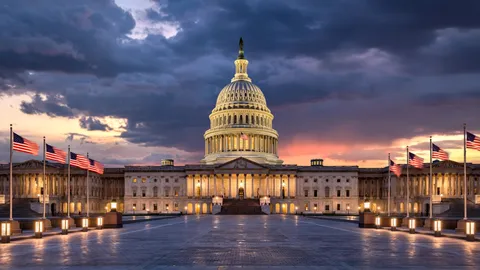
Democrats swept both chambers of Congress in the midterm elections on Tuesday, November 3, 2026, gaining nearly 260 seats in the House of Representatives and adding another Senate seat on November 11, when Democrat Scott Colom was declared the winner in Mississippi, the first Black candidate to win a statewide race in the state since Reconstruction. The scale of the Democratic wave, described in the days after the vote as a historic rebuke of President Donald Trump's second term, ended Republican control of Congress and set up divided government in Washington when the new Congress convenes on January 3, 2027.
Key points
- Democrats gained nearly 260 House seats in the 2026 midterms while Trump returned to fraud claims he could not prove.
- A historic night in Mississippi
- The scale of the wave
- From acceptance to fraud claims
- The machinery behind the claims
The president's response followed a pattern that has defined his politics for more than a decade. On election night, as the scale of the Democratic wave came into focus, Trump said he was "absolutely willing" to accept the results. By Monday, November 9, he was back to his old habits, questioning on Truth Social whether the election had been honest and blaming voting machines and early votes, without presenting evidence.
A historic night in Mississippi
The defining result of the midterms came in Mississippi, where Democratic district attorney Scott Colom unseated two-term Republican incumbent Senator Cindy Hyde-Smith. Colom was declared the winner on November 11, after days of counting in a race that remained uncalled long after most of the country had finished voting. The Palm Beach Post described Colom as the first Black candidate to win a statewide race in Mississippi since Reconstruction, a milestone in a state where Democrats had not been competitive in a statewide Senate contest in living memory.
The race had been one of the last two Senate contests still outstanding after election night, along with Alaska, where Democrat Mary Peltola led Republican Dan Sullivan, according to the Associated Press. Colom's victory gave Democrats another seat in a Senate they had already won, and it turned a state that had leaned heavily Republican into the symbol of the Democratic wave.
The scale of the wave
The House of Representatives told the same story on a national scale. The Associated Press reported that Democrats had won 253 House seats to 155 for Republicans, with dozens of races still uncalled. Decision Desk HQ projected a final total north of 260 seats, the first such haul since the 1990 election.
In the Senate, Democrats had secured at least 54 seats, according to the Associated Press, with the Mississippi result adding another. Whatever the final tallies in the last uncalled races, the matter of who runs Congress was closed within days of the vote.
From acceptance to fraud claims
For a few hours on election night, Trump struck an unfamiliar note: acceptance of Republican losses. He told The New York Times that he was "absolutely willing" to accept the results and looked forward to working with Democrats. On Fox News the same night, asked whether he would accept the races, he answered: "Yeah, sure I'll accept." It was a striking, but ultimately temporary, departure for a president who has spent more than a decade peddling baseless claims of widespread election fraud when he loses, CNN reported on November 14.
By Monday, Trump was back to his old habits. "Does anybody really believe that this 'Election' was honest," he asked on Truth Social, questioning how Democrats had amassed so many early votes and claiming the numbers made it "impossible" for Republicans to win. The post, published at 10:07 a.m. Eastern on November 9, went on: "Some early voting 'dumps' were so large that it was impossible to win, no matter how many people went to vote. It's all about the machines, which are far more important than the voter!"
The claims did not match the record. The polls had forecast a Democratic wave and understated its size, but they were wrong in scale, not in direction. Early and mail votes are counted and reported in batches under state law, so large one-sided totals arriving at once are a normal feature of the count. Election officials across the country raised no major concerns about voting machines or early voting, and the president's post named no state, county, machine or specific error. No evidence of widespread fraud has been presented.
The reaction was swift, and not only from Democrats. Less than an hour after Trump posted his midterm fraud claims on Monday, conservative commentator Megyn Kelly fired off a terse rebuke: "Just stop." CNN reported on November 14 that the pro-Trump voter fraud industry, the network of activists, lawyers and fundraisers built on claims of rigged elections, was facing an existential crisis after the midterm blowout.
The machinery behind the claims
On Election Day, Homeland Security Secretary Markwayne Mullin said in multiple interviews that the Department of Homeland Security planned to conduct a post-election investigation, auditing "voting logs" to look for noncitizens and other ineligible voters. "We'll be gathering the voting logs, and we'll be going through those and making sure that no illegals voted," Mullin told reporters. But Mullin has said little publicly about the audit since the midterms, CNN reported, and a government watchdog, American Oversight, sued the department and United States Citizenship and Immigration Services seeking records of the so-called "Unlawful Voter Initiative" after a whistleblower warned it could wrongly target eligible voters.
There is no evidence that voting machines in the United States have been compromised or that any results have been changed by foreign powers or others, CNN reported, even after an investigation of voting machines inside the administration led by Kurt Olsen, who held posts at the White House and Justice Department.
Hegseth impeachment shelved
On Tuesday, November 10, the House voted 211 to 204 to refer articles of impeachment against Defense Secretary Pete Hegseth to the Judiciary Committee, effectively killing the effort. The resolution, H.Res. 1655, was filed by Representative Thomas Massie, a Kentucky Republican, and contained eight articles accusing Hegseth of waging the Iran war without congressional authorization, carrying out unlawful boat strikes in the Caribbean and targeting Senator Mark Kelly for his speech.
Massie was the only Republican to vote against sending the articles to committee; every other Republican present voted to refer them, while 203 Democrats voted to keep them alive for a floor vote. Eleven Democrats and seven Republicans did not vote. After the vote, Trump wrote that the attempt to impeach Hegseth had "miserably FAILED!" and called the result an "EXONERATION."
The referral leaves little or no time for action before Democrats take control of both chambers in January, CNBC reported. Democrats have promised investigations of the Pentagon once they take the majority, NPR reported, though party leaders have not committed to another impeachment effort. Massie said he would not file another impeachment resolution, CBS News reported, but he plans to force a vote on a war powers resolution.
Why Republicans lost
The midterms were fought, in large part, over the war in Iran, and the war was the explanation most often offered for the Republican defeat. Vice President JD Vance has said the war cost Republicans the midterms, and Trump himself, asked about the result, said: "I think a part of it was Iran." In a "60 Minutes" interview that aired on Sunday, November 8, Trump said of his deportation policy: "I think it was too tough," adding that "ultimately, that hurt me." The war is also the subject Trump plans to raise with Xi Jinping and Vladimir Putin at the first-ever trilateral summit in Shenzhen.
For the White House, the midterms have left a narrowing set of options. The fraud claims offer a way to explain the defeat without accepting it, but they have found little support beyond the president's own supporters. The party that lost Congress is left with a president who says the election was dishonest and a vice president who says the war was the reason, and no agreement between them about what happened on November 3.
What happens next
The new Congress convenes on January 3, 2027, with Democrats in control of both chambers and the White House facing divided government for the first time in Trump's second term. Certification of the midterm results continues state by state, and the last uncalled races will decide the size of the Democratic majorities rather than who holds them.
What the midterms changed is the balance of power, and with it the direction of the next two years. The Democrats who swept into Congress on November 3 will set the agenda in the House and the Senate, investigate the Pentagon and the administration's election machinery, and decide whether the fraud claims of the past decade finally meet a reckoning in hearings and subpoenas. The president who said he was "absolutely willing" to accept the results, and then said he was not, will have to govern with the majorities the voters gave his opponents. Attention is also turning to disasters at home and abroad, from the floods in Thailand to the storms battering the Washington coast.