Trump, Xi and Putin to Hold First Trilateral Summit in Shenzhen
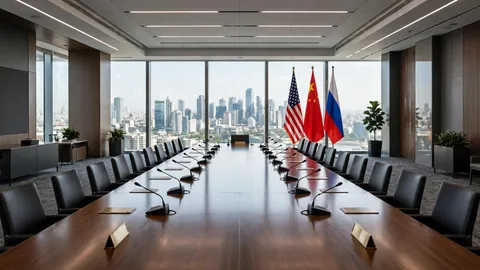
President Donald Trump will meet jointly with Chinese President Xi Jinping and Russian President Vladimir Putin in Shenzhen on Thursday, November 19, in the first-ever trilateral summit of the leaders of the world's three largest nuclear powers, the White House announced on Friday, November 13. The meeting, held on the sidelines of the Asia-Pacific Economic Cooperation summit in the southern Chinese city, will focus on nuclear non-proliferation, a subject Trump has said could produce a new agreement between the world's biggest nuclear-armed states.
Key points
- Trump will meet Xi Jinping and Vladimir Putin in Shenzhen on November 19 for the first-ever trilateral summit on nuclear weapons.
- What the White House announced
- A first meeting, with a low bar for results
- The treaty that expired
- Iran on the table, Ukraine off it
The Kremlin said the meeting will take place on November 19 in Shenzhen, but there has been no confirmation yet from China, CNN reported. The White House announcement, delivered by spokeswoman Olivia Wales, said Trump will discuss reducing nuclear weapons with the two leaders. Senior United States officials, however, set expectations deliberately low: the session is intended as the start of a conversation, not a negotiation expected to produce an agreement.
What the White House announced
Wales told reporters on November 13 that the three leaders will meet on November 19 on the sidelines of the APEC summit, which runs from November 17 to November 19, according to the Associated Press and other news agencies. The APEC leaders' meeting itself is scheduled for November 18 and 19, preceded by the APEC CEO Summit on November 17 and 18. China is hosting this year's summit, with Xi chairing the 33rd APEC Economic Leaders' Meeting under the theme "Building an Asia-Pacific Community to Prosper Together," according to China's foreign ministry.
Trump had signalled the meeting was coming. On Sunday, November 8, he told reporters that he expected to meet Putin and Xi in China and discuss issues including nuclear weapons and the war in Iran, according to reports citing Reuters. The White House confirmation on Friday turned that expectation into a scheduled event, though officials stressed that the format and venue details had not been released and that planning was still in motion when the announcement landed.
The trip is part of a wider Asia tour. Trump is scheduled to attend the Association of Southeast Asian Nations summit in Manila, in the Philippines, earlier in the week before travelling on to Shenzhen, according to the Seoul Economic Daily. A widely anticipated meeting between Trump and North Korean leader Kim Jong-un during the trip appears unlikely to take place, the newspaper reported.
A first meeting, with a low bar for results
Officials on all sides have been careful to describe the Shenzhen session as an opening rather than a conclusion. "We do not expect to get to any kind of agreement," a senior United States official told reporters, according to CNN. The Associated Press quoted a United States official describing the meeting as the "beginning of hopefully a conversation" on nuclear disarmament "that can be productive going forward," adding that no agreements are expected to be announced.
The treaty that expired
The summit comes after the last nuclear arms treaty between the United States and Russia expired in February 2026. New START, which limited the deployed strategic nuclear weapons of the two countries, expired on February 5, 2026, and the State Department confirmed the expiration in a February 6 address to the Conference on Disarmament in Geneva. The expiry left the world's two largest nuclear powers without any binding cap on their arsenals for the first time in decades, according to the reporting.
That gap is the backdrop to Trump's push for a new framework. The White House has said the president believes a trilateral discussion could eventually yield a new agreement between the world's biggest nuclear-armed states, CNN reported. Whether that is realistic is an open question: the United States government expects the summit to open discussions toward future nuclear disarmament negotiations rather than produce a concrete agreement, according to the Associated Press.
Previous treaties between Washington and Moscow were bilateral, negotiated over years by teams of specialists. A three-way negotiation that includes China, which has never been party to a binding nuclear arms limit, would be considerably more complicated, and officials have given no indication that detailed negotiations are anywhere near starting.
Iran on the table, Ukraine off it
Alongside nuclear weapons, Trump intends to raise the war in Iran with both Xi and Putin, a senior United States official told reporters. The war the United States is currently waging against Iran is set to be one of the two main subjects of the trilateral session, according to the Seoul Economic Daily, which cited senior United States officials.
Russia's war in Ukraine, by contrast, will not be discussed at the trilateral session at all, the official said. Negotiations to end Russia's invasion of Ukraine are unlikely to be taken up at the summit, according to the Associated Press. That division of subjects is itself a point of tension: Putin has pushed for talks on ending the war in Ukraine, according to earlier reporting, but the White House has kept the trilateral agenda to nuclear weapons and Iran.
The split reflects the different stakes each leader brings to Shenzhen: nuclear weapons and Iran for Trump, Ukraine for Putin, and the host's role for Xi.
A history of meetings in pairs
The three leaders already know one another well, and the reporting around the summit has dwelt on how often they have met two at a time. Xi and Putin have met more than 40 times since Xi became president in 2013, building a close personal relationship and addressing each other as "dear friend," according to the Associated Press.
Trump and Putin have met face to face on seven different occasions, most recently in Alaska in August 2025, the Associated Press reported. Trump and Xi have held face-to-face talks on eight occasions, including a September state visit to Washington by Xi. Those histories mean the Shenzhen meeting will not be an introduction. The novelty is the format: three leaders, one room, and an agenda that touches the world's most dangerous weapons.
Trump is also scheduled to meet Xi separately on Thursday afternoon, for talks and a working lunch, before the three-way gathering at the end of his China visit, according to the reporting. No separate one-on-one meeting with Putin is scheduled, United States officials said, though Putin will appear with Trump at summit events and in the trilateral session.
What to watch in Shenzhen
The first thing to watch is whether China formally confirms the meeting. The White House and the Kremlin have both pointed to November 19 in Shenzhen, but Beijing had not confirmed its participation when the announcement was made, and the absence of a Chinese confirmation leaves the most basic question about the summit open until the week itself.
The second is what, if anything, the three leaders say together afterwards. With no agreement expected, the measure of the meeting will be the language the three governments use to describe it: whether they commit to further talks, name a process, or settle for a photograph. A joint statement, or even a shared commitment to keep talking, would be more than officials have promised and less than a negotiation.
The third is the wider APEC summit, which brings together 21 economies and which the trilateral could easily overshadow. The APEC gathering is the reason all three leaders are in Shenzhen at the same time, and the trilateral was arranged on its sidelines rather than as a standalone event. How the rest of the summit proceeds around the three-way meeting will say something about how much room the world's largest economies are willing to give to a conversation about the weapons that could destroy them.
For now, the facts are narrow and the expectations are low. Three leaders will meet in Shenzhen on November 19, for the first time as a trio, to talk about nuclear weapons and Iran. No agreement is expected, and whether the conversation continues after they leave the room is the question the summit was called to answer. As the shock of the Democrats' midterm sweep continues to reshape Washington, the White House is looking abroad for a stage of its own: Democrats swept the midterms just days before this announcement. The week will also test whether markets can stay calm while the largest powers argue over war and weapons, as Bitcoin's crash below $67,000 showed how quickly sentiment can turn, while much of the world deals with disasters of its own, from Cyclone Charles flooding across Europe to storms battering coastlines elsewhere.