World Court Rules Myanmar Committed Genocide Against the Rohingya
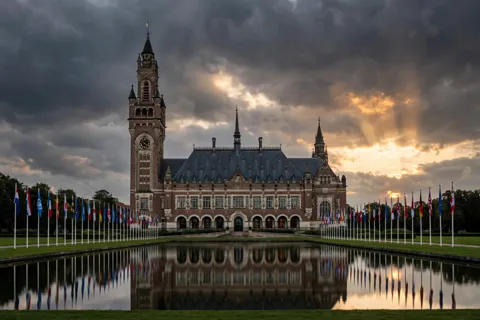
The United Nations' highest court ruled on Thursday, November 19, 2026, that Myanmar committed genocide against the Rohingya Muslim minority during its military's "clearance operations" in 2017, delivering a final and binding judgment that ends a seven-year legal battle and marks the first time the court has ever held a state responsible for genocide.
Key points
- The International Court of Justice ruled Myanmar committed genocide against the Rohingya in 2017, ordering compensation and the safe return of refugees.
- A verdict nine years in the making
- What the judges found
- A precedent that reaches far beyond Myanmar
- What the ruling means for the Rohingya now
Reading the judgment at the Peace Palace in The Hague, presiding Judge Yuji Iwasawa said Myanmar's security forces "killed thousands of Rohingya civilians, perpetrated widespread acts of sexual violence as well as acts of extreme violence against children and attacked fleeing Rohingya" as they sought to escape to Bangladesh. A panel of 15 judges found that "the Republic of the Union of Myanmar has committed genocide against the Rohingya group in Northern Rakhine State."
The court said the only reasonable inference from the evidence was that Myanmar acted with the intent to destroy a substantial part of the Rohingya population in northern Rakhine State — the specific intent that international law requires to prove genocide. It ordered Myanmar to compensate the Rohingya for the violations it committed, with the amount to be determined at a later date, and to allow the "safe and dignified return to their place of residence and the reunification of families for the Rohingya displaced as a result of Myanmar's wrongful acts."
A verdict nine years in the making
The case was brought by The Gambia, a small West African nation backed by the 57-member Organisation of Islamic Cooperation, which filed its application on November 11, 2019, accusing Myanmar of breaching the 1948 Genocide Convention. The convention obliges states to prevent and punish genocide and allows disputes between countries to be heard by the International Court of Justice, known as the World Court.
The road to Thursday's judgment was long. In January 2020, the court ordered Myanmar to take urgent measures to protect Rohingya people remaining in the country, including preventing possible genocidal acts and preserving evidence. In July 2022, it rejected Myanmar's preliminary objections and confirmed that it had jurisdiction and that The Gambia's application was admissible. Hearings on the merits of the case were held in January 2026, with The Gambia telling the judges that Myanmar had targeted the Rohingya for destruction, and Myanmar responding that the case had not been proven. The court announced on November 3 that it would deliver its judgment on November 19.
The judgment is final and cannot be appealed. But the court has very limited options to enforce it. The International Court of Justice settles disputes between states and rules on alleged breaches of international treaties; it is distinct from the International Criminal Court, which prosecutes individuals for war crimes, crimes against humanity and genocide and can impose prison terms.
What the judges found
According to the court, Myanmar's military carried out mass executions of men and boys, committed widespread rape and sexual violence against Rohingya women, and burned or razed hundreds of villages during the so-called clearance operations. The military also actively spread hate speech targeting the Rohingya population, the judges said.
The violence began on August 25, 2017, when the Arakan Rohingya Salvation Army, a Muslim militia, attacked 30 police posts and a military base in Rakhine State. The military's response drove more than 730,000 Rohingya across the border into Bangladesh in a matter of weeks. On September 11, 2017, the United Nations human rights chief called the operation "a textbook example of ethnic cleansing."
The scale of the killing was documented early. A survey published by Medecins Sans Frontieres in December 2017 found that at least 6,700 Rohingya were killed between August 25 and September 24, 2017, in the most conservative estimates, including at least 730 children below the age of five. Evidence cited during the reading of Thursday's verdict put the death toll at around 10,000. More than one million Rohingya refugees now live in Bangladesh, most of them in the Cox's Bazar district, according to the United Nations.
Myanmar has consistently denied genocide, saying its forces were targeting militants. Its government did not immediately respond to a request for comment on Thursday's ruling, according to Reuters. In December 2019, Myanmar's then leader, Aung San Suu Kyi, appeared before the court in person and rejected the accusations as "incomplete and misleading." She was arrested weeks later when the military staged a coup on February 1, 2021, overthrowing the elected government and plunging the country into nationwide conflict.
A precedent that reaches far beyond Myanmar
Genocide has rarely been established in international courts, largely because prosecutors must prove a specific intent to destroy, in whole or in part, a national, ethnic, racial or religious group. Thursday's decision marked only the fourth time since the Nazi Holocaust that an international court has ruled that the legal threshold to prove genocide had been met. International courts previously recognised genocide only in the 1994 Rwanda genocide, the 1995 Srebrenica killings in Bosnia, and the atrocities of Cambodia's Khmer Rouge in the late 1970s.
That rarity is why the judgment is expected to have repercussions far beyond Myanmar. It is the first major decision by the court in more than a decade on the application of the 1948 Genocide Convention, and legal experts will pore over it for clues about how the bench assessed state responsibility for the alleged commission of international crimes. The decision is also expected to influence South Africa's 2023 case accusing Israel of genocide in Gaza, which is still before the court. Both Israel and Myanmar deny genocide and say their forces responded legitimately to attacks by armed groups.
Human Rights Watch called the ruling a critical milestone. "The International Court of Justice's landmark ruling is long-awaited recognition of the suffering the Rohingya have endured from Myanmar's military," said Maria Elena Vignoli, the organisation's senior international justice counsel. "The ruling also provides a significant precedent for victims of genocide, and other grave crimes, across the world in their own quest for justice."
The ruling arrives in a week crowded with high-stakes diplomacy. The leaders of the United States, China and Russia met in Shenzhen on Thursday for their first trilateral summit, while war in the Gulf continued to widen. American jets struck an Iranian missile site this week as Iran hit United States bases in Bahrain and Kuwait, a reminder that the institutions built to uphold international law are being tested on several fronts at once.
What the ruling means for the Rohingya now
For the more than one million Rohingya living in camps in Bangladesh, the judgment brings legal recognition — but not yet a way home. As conflict rages on in Rakhine State, conditions for the safe return of refugees do not currently exist, according to aid groups. Myanmar said in August that it had verified 308,797 people living in displacement camps in Bangladesh as former residents of Rakhine State, but that repatriation would begin only when security conditions in Rakhine improve.
Human Rights Watch urged governments to act on the judgment. "Myanmar should swiftly comply with the court's judgment and end its oppression of the Rohingya," Vignoli said. "Concerned governments should strongly support the Rohingya and promote justice for atrocities, press Myanmar's junta to comply with the judgment, and ensure the safe and voluntary return of Rohingya refugees to Myanmar."
Whether that pressure materialises will depend on governments that have spent years debating how to respond to Myanmar's military government. The United States and other Western governments have imposed sanctions on the junta since the 2021 coup, but the generals have retained the backing of key regional partners. The court's order on compensation and return gives those governments a concrete legal basis for demanding action — and a measure against which to judge whether Myanmar complies.
The judgment also lands in a changed political landscape in Washington. Democrats swept the 2026 midterm elections, winning control of Congress, and the new balance of power is likely to shape how the United States presses Myanmar's junta on the court's orders in the months ahead.
What happens next
Three questions will determine what Thursday's ruling actually changes. First, whether Myanmar's military government complies with the court's orders on compensation and the safe return of refugees — or ignores them, as states have done with World Court judgments before. The court has no police force and no army; enforcement depends on the United Nations Security Council, where veto-wielding members have often blocked action on Myanmar.
Second, whether the amount of compensation is ever fixed. The court left the figure to be determined later, which means a further phase of proceedings — and further years of waiting — before victims or their families see any payment. For many Rohingya, the more urgent demand is not money but the right to return to the villages that were burned, and to live there without fear.
Third, whether the judgment changes the legal landscape for other cases. The court's reasoning on intent — that the "only reasonable inference" from a pattern of killings, sexual violence, village burnings and hate speech was genocidal intent — will now be studied by lawyers and judges in every pending genocide case, including the one concerning Gaza. The precedent is set. What remains to be seen is whether it is followed.
For the Rohingya, Thursday was the day the world's highest court finally said what they have said for nine years: that what happened to them in 2017 was genocide. The judgment cannot bring back the dead, rebuild the burned villages, or end the war still raging in Rakhine State. But it puts Myanmar's name, in a final and binding ruling, on the short list of states found responsible for the gravest crime in international law — and it gives the survivors a judgment they can carry into every negotiation, every courtroom and every campaign for their return that follows.