US Strikes Iran as Tehran Hits Gulf Bases: The Conflict Widens Across the Gulf
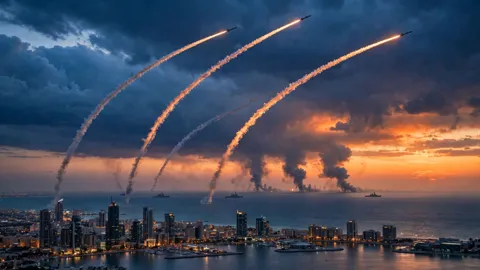
The war in the Gulf widened sharply this week. On Tuesday, November 17, 2026, United States fighter jets struck an Iranian missile launch site on Qeshm Island in the Strait of Hormuz, hours after Iran launched drones at a United States radar installation in Bahrain. Within a day, Iran had widened its attacks again, striking at a United States air base in Kuwait and launching further attacks toward Bahrain — the first Iranian attack on Kuwait since September — in the fastest escalation of a conflict that has now burned for nine months.
Key points
- US jets struck an Iranian missile site on Qeshm Island as Iran hit US bases in Bahrain and Kuwait, widening a nine-month-old Gulf conflict.
- A day of strikes and counter-strikes
- Why the Gulf states are now targets
- Nine months of war, no end in sight
- Diplomacy under pressure
It is the most dangerous sequence of exchanges in the Gulf since the fighting began, and it is unfolding even as diplomats scramble to end the war. The United States military official who confirmed the Qeshm strike to Reuters spoke on condition of anonymity and said the jets targeted a Revolutionary Guards missile launch site in retaliation for Iran's targeting of American personnel and assets. The United States Central Command, known as CENTCOM, said separately that multiple Iranian one-way attack drones launched toward Bahrain had been intercepted, with no damage to American equipment and no injuries to American personnel.
For the Gulf states caught in the middle, the week has brought a new and unwelcome reality: the war is no longer confined to the waters of the Strait of Hormuz. It is reaching their air bases, their radar stations and their cities.
A day of strikes and counter-strikes
The sequence began on Tuesday with an Iranian drone attack on the United States radar system at Sheikh Isa Air Base in Bahrain. Iran's Islamic Revolutionary Guard Corps said the drones targeted the radar installation, describing the operation as retaliation for what Tehran called violations of Iranian airspace by American military drones. Bahrain and the United States said the attack was intercepted. The Associated Press described it as the third Iranian attack on American military targets in Bahrain in five days — the previous strikes had come on Friday, November 13, and Sunday, November 15 — a tempo that made clear this was not an isolated incident but a sustained campaign.
The American response came within hours. United States fighter aircraft struck the Revolutionary Guards missile launch site on Qeshm Island, a large island on the Iranian side of the Strait of Hormuz, the narrow waterway through which a large share of the world's seaborne oil passes. Qeshm sits at the mouth of the strait, and a missile site there can threaten shipping and the American naval forces that patrol the Gulf. The strike was the first direct American attack on Iranian territory in this round of fighting that officials have publicly confirmed.
But the exchange did not stop there. In the early hours of Wednesday, November 18, Iran's army said its combat drones had struck United States air defense systems and drone and missile launchers at Ali Al Salem Air Base in Kuwait, and claimed the operation had destroyed Patriot batteries and launch positions used by the American military at the base. Kuwait's armed forces said its air defenses were engaging hostile drone attacks and advised residents that explosions they might hear were caused by interception operations. Kuwait's foreign ministry condemned what it called repeated criminal Iranian attacks, calling them a gross violation of sovereignty and a dangerous escalation undermining diplomatic efforts to de-escalate. Iran's claim of a hit on the base has not been independently verified, and Kuwait reported no casualties or damage.
Bahrain came under new attacks the same night. The General Command of the Bahrain Defence Force said its air defenses had repelled several Iranian aerial attacks in the early hours of Wednesday, and accused Tehran of maintaining a systematic hostile approach toward the kingdom. Bahrain's foreign ministry said the aerial threats were neutralized before reaching their targets, and the interior ministry issued two separate alerts instructing people to remain calm, seek the nearest safe location and follow official guidance.
Why the Gulf states are now targets
The attacks on Bahrain and Kuwait mark a deliberate widening of the conflict. Bahrain hosts the headquarters of the United States Navy's Fifth Fleet, the naval command responsible for American operations across the Middle East, and its air bases are central to the American military footprint in the Gulf. Kuwait hosts thousands of American troops at bases including Ali Al Salem and Camp Arifjan. By striking at those installations, Iran is signaling that it can reach American forces wherever they are based in the region — and that the Gulf monarchies that host them will not be spared.
Reuters reported on Wednesday that Gulf countries had intercepted missiles and drones from Iran and its Houthi allies in Yemen, underscoring that the attacks are coming from more than one direction. The Houthis, who control much of northern Yemen and have been fighting alongside Iran's allies for years, have repeatedly launched missiles and drones toward Gulf and Red Sea targets during the war.
For the Gulf states, the dilemma is acute. They have spent years trying to balance their security partnerships with Washington against their desire to avoid becoming battlefields in a war between the United States and Iran. The attacks on Bahrain and Kuwait show that balance is becoming harder to hold. Bahrain has now been attacked three times in a week. Kuwait, which had not been targeted since September, is a target again. Both countries have condemned the attacks publicly while relying on American and their own air defenses to stop them.
Nine months of war, no end in sight
The fighting that erupted this week is part of a war that has now lasted nine months, and the escalation comes despite ongoing diplomatic efforts to end it. Reuters reported that the uptick in hostilities arrived even as efforts continued to bring the conflict to a close, and the timing — with leaders gathering for high-level diplomacy elsewhere in Asia — has only sharpened the contrast between the search for a settlement and the reality on the ground.
The war's roots run through a chain of earlier confrontations in and around the Strait of Hormuz. Tankers were hit by mines near the strait just days earlier, in an attack that raised fears about the safety of one of the world's most important energy shipping lanes. The strait carries a large share of global oil exports, and every incident there sends ripples through energy markets and shipping insurance rates, even when the physical flow of oil is not interrupted.
The United States has framed its strikes as defensive retaliation, aimed at the missile and drone capabilities Iran uses to threaten American forces and shipping. Iran has framed its attacks as retaliation of its own — for American drone flights it says violate its airspace and for the American strikes on its territory. Each side's retaliation becomes the other side's justification for the next round, a dynamic that has sustained the war for nine months and now threatens to pull in more countries.
Diplomacy under pressure
The escalation lands at an awkward moment for diplomacy. The leaders of the United States, China and Russia are meeting in Shenzhen this week, in a trilateral summit that was meant to showcase great-power diplomacy at a moment of global tension. The Gulf fighting, and the question of how Washington, Beijing and Moscow each respond to it, now hangs over that gathering. China is a major buyer of Gulf oil and has close ties to both Iran and the Gulf Arab states; Russia has its own interests in the region and in the outcome of the war.
Within the United States, the escalation also plays into a domestic political landscape that has just been reshaped. Democrats swept the 2026 midterm elections, winning control of Congress and the Senate, and the new balance of power in Washington will shape how the administration's handling of the Gulf war is scrutinized in the months ahead. The strikes on Qeshm Island and the attacks on American bases in the Gulf will now be debated in a Congress whose leadership has changed hands.
For now, the immediate questions are military ones: whether Iran will continue its attacks on Gulf bases, whether the United States will strike again, and whether the air defenses of Bahrain and Kuwait can keep intercepting what comes at them. The Gulf states have invested heavily in missile defense, and so far the interceptions have held — no American personnel have been reported injured, and no major damage has been confirmed. But the tempo of attacks is rising, and each new round tests those defenses a little more.
What happens next
Three developments will determine where the conflict goes from here. First, whether the diplomatic efforts to end the nine-month war produce a ceasefire or a framework for talks before the cycle of retaliation escalates further. The fact that both sides are still talking — even as they trade strikes — leaves a narrow opening, but the widening of attacks to Kuwait suggests the window is narrowing.
Second, whether the Gulf states, having been drawn directly into the fighting, push harder for a settlement or for stronger American protection. Bahrain and Kuwait have both condemned the attacks and relied on their defenses; if the attacks continue, they may demand more from Washington — more missile defense, more naval presence, or more pressure on Tehran — and their demands will shape the American response.
Third, whether the conflict spreads further. The involvement of Houthi forces in Yemen, the targeting of shipping in the Strait of Hormuz, and now the attacks on American bases in two Gulf states show a war that is already regional in scope. The risk is not only that the next round of strikes hits harder, but that it hits somewhere new — another base, another shipping lane, another country that thought it was on the sidelines.
For the people of the Gulf, the war is no longer something that happens at sea or in distant capitals. On Wednesday morning, residents of Kuwait heard explosions as air defenses engaged incoming drones, and residents of Bahrain received alerts telling them to seek safe locations. The conflict has arrived in their skies. Whether it stays there, or grows, will be decided in the days ahead.